
 English
  Portuguese
  Spanish
The quality of an executive aircraft is often immediately perceived through the level of cabin comfort — and, above all, by its silence. In this context, advanced soundproofing solutions become a strategic differentiator for both operators and owners, directly impacting the onboard experience and the aircraft’s perceived value.
Data-Driven Engineering: The Technical Differentiator
Modern aeronautical soundproofing is not based solely on materials, but on data-driven engineering. Systems developed from in-flight sound frequency analysis enable the identification of the specific “acoustic signature” of each aircraft, considering real operating conditions such as cruise speed and altitude. This method enables the development of customized solutions, simultaneously optimizing
three criticalfactors:
- Effective noise and vibration reduction
- Minimization of additional weight
- Compliance with aeronauticalrequirements
Materials and Aeronautical Certification
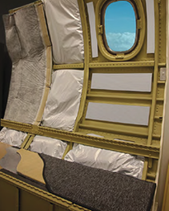
These systems utilize certified thermal and acoustic materials, including insulation blankets, structural panels, and specific cabin linings. All components comply with flammability requirements under regulation 14 CFR 25.856(a), ensuring operational safety and certification for Part 25 aircraft.
Additionally, the integrated application of these materials supports more than 80 different aircraft models, demonstrating versatility and industrial standardization.
Performance Measurement: dB(A) and dB(SIL)
Acoustic evaluation is based on two primary parameters:
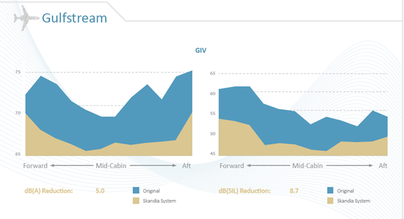
- dB(A): measures overall noise perception across the audible spectrum.
- dB(SIL): focuses on frequencies critical for speech intelligibility (1000–4000 Hz), directly related to cabin comfort.
A key technical pointis that a reduction of just 3 to 5 dB(SIL) can represent up to 50% perceived noise reduction, highlighting the significant impact of even small improvements.
Practical Results: Evidence Across Multiple Platforms
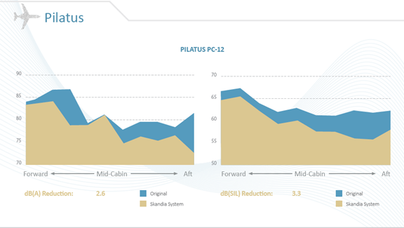
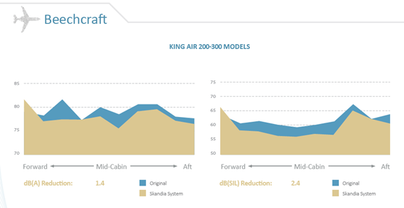
The presented data demonstrates measurable noise reductions across various executive aircraft. Results show consistent gains across different segments and cabin configurations, with improvements distributed across forward, mid-cabin, and aft regions, as illustrated in comparative analyses.
Application and Value for Operators
The implementation of advanced soundproofing systems delivers direct benefits:
- Increased comfort and reduced fatigue on long flights
- Improved onboard communication intelligibility
- Aircraft value appreciation in the market
- Competitive differentiation in executive operations
Furthermore, the turnkey approach — from acoustic analysis to post-installation validation — ensures predictable results and full technical control of the Project.
Application and Value for Operators Aeronautical soundproofing has evolved from a simple interior enhancement into an essential element of engineering and user experience. Solutions based on data analysis, certified materials, and objective performance validation represent the current state of the art in the industry.
In an increasingly experience-driven market, reducing noise is not just about comfort — it is measurable added value. Rely on the materials and technical engineering expertise of Skandia to achieve your acoustic comfort objectives.