 English
  Portuguese
  Spanish
The Critical Importance of Aircraft Seat Belt Re-Webbing and Replacement
Passenger safety is the foundation of aviation, and one of the most overlooked yet essential safety components onboard any aircraft is the seat belt. While aircraft seat belts are designed to withstand significant loads and provide reliable restraint during normal operations and emergency situations, they are not intended to last indefinitely. Regular inspection, re-webbing, and replacement are critical maintenance activities that directly affect occupant safety and regulatory compliance.
Why Aircraft Seat Belts Require Re-Webbing
The webbing—the textile portion of the seat belt—is exposed to continuous wear throughout its service life. Daily use, ultraviolet (UV) exposure, cleaning chemicals, moisture, abrasion, and environmental contaminants gradually degrade the material’s strength and integrity. Even when damage is not immediately visible,the webbing fibers may lose part oftheir original load-bearing capacity overtime.
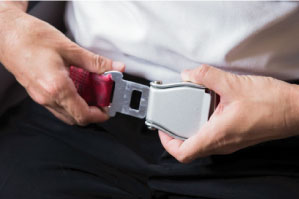
Industry best practices generally recommend that aircraft seat belt webbing be replaced or re-webbed every four years. However, belts should be removed from service immediately if any signs of deterioration are detected before reaching thatinterval.
Common indicators that a seat belt should be replaced include:
- Fraying, cuts, ortears in the webbing;
- Fading or discoloration caused by UVexposure;
- Stiffness, brittleness, or contamination of the material;
- Damaged buckles or attachment hardware;
- Missing, illegible, ortorn certification labels.
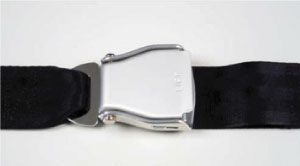
Failure to address these issues can compromise the belt’s ability to restrain an occupant during turbulence, hard landings, or emergency situations
What Happens During the ReWebbing Process
Aircraft seat belt re-webbing involves much more than simply replacing the fabric. A qualified repair facility performs a comprehensive refurbishment process thattypically includes:
- Replacement ofthe existing webbing;
- Inspection of buckles, latches, anchors, and attachment hardware;
- Repair orreplacement of damaged components;
- Installation of new identification labels;
- Verification that all parts conform to the original design and part-numberrequirements;
- Issuance of the appropriate airworthiness and maintenance documentation.
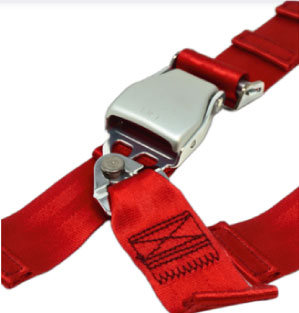
The identification labels are particularly important because they contain critical information such as:
- manufacturing date
- part numbers
- subcomponentreferences
- belt dimensions.
Maintaining this traceability is essential for regulatory compliance and continued airworthiness.
Regulatory Compliance and Maintenance Best Practices
Although specific requirements may vary depending on the aircraft type, authority, and seat belt manufacturer, aviation maintenance programs are generally guided by regulations and standards established by authorities such as the FAA, EASA, and aircraft manufacturers.
Operators should ensure that:
- Seat belts are inspected during scheduled maintenance events;
- Any signs of wear or damage are addressed immediately;
- Labels remain legible and intact;
- Repairs are performed only by approved facilities using approved materials and procedures;
- Maintenance records accurately document all actions performed.
Proactive re-webbing not only enhances safety but also reduces operational disruptions caused by seats being removed from service.
Seat Belts Must Be Replaced After an Impact Event
One of the most critical principles in aircraft occupant restraint systems is that seat belts exposed to an impact event must be removed from service and replaced.
When an aircraft experiences a hard landing, runway excursion, accident, severe turbulence resulting in occupant loading, or any event that subjects the restraint system to abnormal forces, the seat belts may have absorbed significant energy.
Although the webbing and hardware may appear undamaged, microscopic stretching, fiber damage, and hidden structural degradation can occur.
For this reason, all seat belts installed in an aircraft that has experienced an impact event should be replaced, regardless of their apparent condition. Reusing belts that have already sustained overload or crash forces introduces unnecessary risk and may compromise passenger protection during a subsequent event.
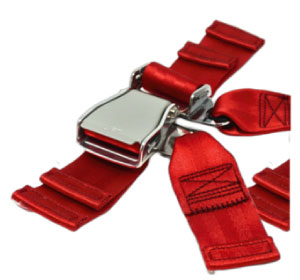
Simply put, aircraft seat belts are extremely strong, but they are not intended to withstand multiple impact events. Replacing them after an accident or significant impact is not merely a maintenance recommendation—itis a critical safety requirement.
Conclusion
Aircraft seat belts constitute a critical safety system and must receive the same level of attention as any other componentrelated to airworthiness.
Regular inspections, timely re-webbing, and strict compliance with maintenance standards help ensure that restraint systems function exactly as designed when they are most needed.
Whether due to natural aging, wear and tear, damaged labels, or exposure to impact forces, seat belts that no longer meet airworthiness standards must be repaired orreplaced without delay.
Investing in proper maintenance of seat belts is not only a regulatory responsibility. It is a direct investmentin passenger safety, operationalreliability, and the ongoing maintenance of the aircraft’s airworthiness.